Category: Santa Fe

  • Santa Fe man acquitted of murder after witnesses recant

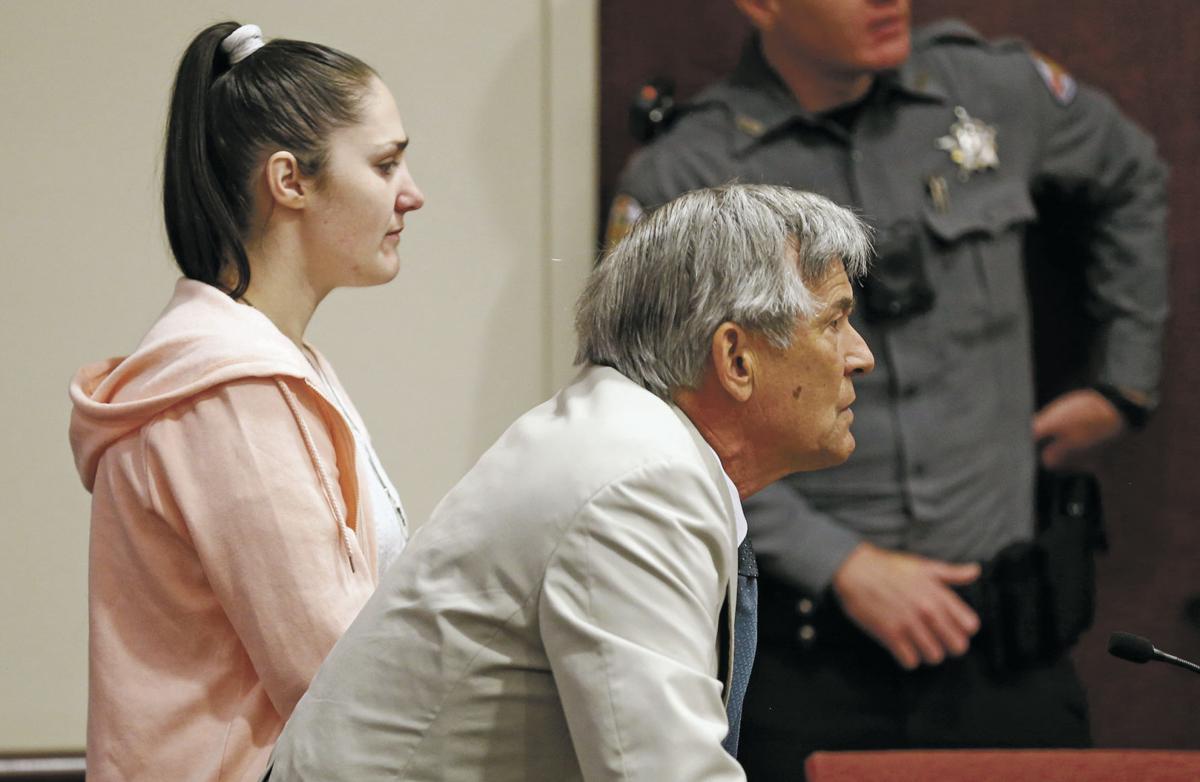
    A Santa Fe County jury found 20-year-old Zachary Gutierrez not guilty Friday in the 2018 shooting death of Richard Milan, 64, of Michigan.

    Gutierrez shook and sobbed as state District Judge T. Glenn Ellington read the verdict.

    Jurors deliberated for about four hours Friday, the fourth day of Gutierrez’s murder trial, before unanimously deciding the state had not proven beyond a reasonable doubt he was guilty of fatally shooting Milan.

    Milan, who had been visiting the city with his wife, was out walking his dog on a trail near the intersection of Airport Road and Lucia Lane around 8 p.m. Sept. 26, 2018, when an encounter with Gutierrez, then 17, and four other teenagers turned deadly.

    Gutierrez was charged with second-degree murder after his companions made statements to police implicating him in Milan’s death. But two of the three girls in the group testified Thursday it was another boy in the group, Jesus Arrieta-Perez, not Gutierrez, who shot Milan.

    Gutierrez also testified Thursday that Arrieta-Perez had killed Milan.

    “I’m relieved,” Gutierrez’s attorney, Stephen Aarons, said in the hall outside the courtroom after the verdict was read. “It was what I expected, but you never know for sure. I think the biggest surprise isn’t the verdict but that the state went forward with this case with so much evidence against their position.”

    District Attorney Mary Carmack-Altwies wrote in an email she was “disappointed” in the verdict. She added in a text message the case relied on witnesses’ statements as the basis for charging Gutierrez, and “those statements then totally changed.”

    “While witness testimony initially put Mr. Gutierrez as the person that shot and killed Mr. Milan, they later changed their testimony,” the district attorney wrote in an email. We and law enforcement believed that [Arrieta-Perez] was credible and that was an issue for the jury to decide. We prosecuted the case that was presented.”

    Arrieta-Perez initially told police he didn’t see who shot Milan because he was running away from the confrontation, but he changed his story after being arrested on a federal weapons charge.

    He then said he had seen Gutierrez shoot the man.

    Police never found the murder weapon — and never compared the three shell casings found at the scene to weapons found in Arrieta-Perez’s home, according to Aarons — making Arrieta-Perez’s testimony against Gutierrez the strongest evidence the state had.

    Aarons attacked Arrieta-Perez’s credibility in his closing argument Friday, running down a list of things the lawyer said made the young man’s testimony unreliable.

    One of the main things that set Arrieta-Perez apart from the other young people who testified, Aarons told the jury, was his lack of emotion on the stand.

    “He was a pretty cool customer up there,” Aarons said, and didn’t break down like the three others who testified about what had happened that night.

    “He is not working through grief or guilt or remorse,” Aarons said. “They were going through a process. [Arrieta-Perez] is not because he is stuck in a lie. He cannot tell people the truth. If he told people the truth, he would have these federal charges come down on him.”

    Arrieta-Perez said on the stand his testimony against Gutierrez didn’t effect his federal case.

    But Aarons cast doubt on that Friday, telling the jury he couldn’t remember the last time a Mexican national with drug and weapons charges was released from jail and not deported, as was the case with Arrieta-Perez.

    “I’m sure he’s an asset to the government,” the defense attorney said. “I wish him well on that. But the way he got out, by falsely accusing someone else, we cannot accept his testimony beyond a reasonable doubt.”

    The murder case was not the first or last time Gutierrez faced trouble.

    He had an extensive history of encounters with law enforcement as a juvenile.

    He was arrested in another case in February 2019 — about six months after Milan’s death and a few months before he turned 18 — in which he was accused of firing a handgun and fleeing police following an altercation at a local park.

    Mary Carmack-Altwies said in a text message Friday that case — in which she said Gutierrez pleaded no contest to shooting at or from a motor vehicle and was sentenced as a juvenile to two years of probation — is one of the reasons her office believed he’d shot Milan.

    “But we couldn’t bring that in at trial,” she wrote.

    Gutierrez said after the verdict was read Friday he’s transformed his life since then.

    “I’m totally different than when I started this three years ago,” he said. “I’m so into the Lord and energy and being at peace. … I love yoga. I love meditation, because it’s so centered. I never loved myself before. I was always chasing something I wasn’t, and I finally found my true self.”

    Gutierrez — who has been on electronic monitoring awaiting trial — said he started his own home repair and maintenance business a year ago and plans to work toward general contractor and real estate licenses next.

    Gutierrez’s mother and father, Cecelia and Matthew Gutierrez, said they knew their son hadn’t killed Milan. Despite being tested by the ordeal, they said, the family had come out stronger in the end.

    “It’s been a long three years,” Cecelia Gutierrez said. “We are just so glad the truth has come out and we were set free from that. I’m just glad justice was served because there is a lot of times people don’t see that. I’m just glad the jury … saw a lot of the corrupt stuff that had happen and that my son is innocent.”

    No one from Milan’s family attended the trial.

    This is the second murder case handled by the First Judicial District Attorney’s Office this week in which a jury returned a verdict of not guilty.

    A Rio Arriba County jury on Thursday acquitted Gabriel Sanchez, 29, of fatally shooting William Jimerson, 67 in 2017 following a trial in Tierra Amarilla.

    Asked whether she felt two murderers had been set free, the district attorney wrote in an email: “I would never allow my office to prosecute a case that I didn’t think was viable. … I fully believe that both defendants committed those crimes but we simply didn’t have the evidence to prove it beyond a reasonable doubt.

    “I’d much rather respond to a hard fought acquittal than dismiss a case that’s not perfect,” she wrote

  • Judge rules Santa Fe teen can await trial out of jail

    Lawyers for a Santa Fe teenager charged with second-degree murder in connection with the 2018 shooting death of a Michigan man told a district judge during a Tuesday hearing that another man may have pulled the trigger.

    Zachary Gutierrez is accused of killing Richard Milan, 64, who police say had stopped in Santa Fe with his wife during a cross-country trip and was walking his dog near the intersection of Airport Road and Lucia Lane on the evening of Sept. 26, 2018, when he encountered a group of teens, exchanged words with Gutierrez and was shot twice.

    Gutierrez, 17, at the time of the shooting, was charged with the crime in 2018, but District Attorney Marco Serna dismissed the charges about a month later, saying he didn’t have enough evidence to present the case to a grand jury before a December 2018 deadline.

    Judge rules Santa Fe teen can await trial out of jail

    Zachary Gutierrez, center, walks out of District Judge Mary Marlowe Sommer’s courtroom Tuesday after she ruled he will be allowed to remain out of jail on electronic monitoring while awaiting trial on a second-degree murder charge. Matt Dahlseid/The New Mexican

    Serna’s office refiled the charges — first in juvenile delinquency petition and then through a grand jury indictment — in September.

    But Gutierrez’s attorneys said in court Tuesday the case against Gutierrez is far from open and shut, claiming another young man — a Mexican national charged in U.S. District Court with unlawful possession of a firearm — may be responsible for Milan’s death.

    Lawyers Stephen Aarons and Hugh Dangler said evidence has come to light in the year since the shooting that indicates it may have been Jesus Arrieta-Perez who shot Milan, then stood over his body laughing.

    “A lot of evidence suggest he [Gutierrez] is not the shooter, that Mr. Arrieta was,” Aarons said.

    Aarons said two of the three females in a group of five teens who allegedly witnessed the incident texted each other afterward, saying it “wasn’t fair” Gutierrez, now 18, had been charged.

    Arrieta-Perez’s attorney did not immediately respond to a message seeking comment late Tuesday.

    Aarons said Arrieta-Perez initially had said he didn’t see who shot Milan. But after being arrested earlier this year on a weapons charge and questioned by federal agents from the Department of Homeland Security, Arrieta-Perez claimed Gutierrez was the shooter.

    Aarons on Tuesday referenced a video recording of an interview in which he said agents told Arrieta-Perez “we have a lot to offer you in terms of your cooperation. … It’s going to depend on what you have to offer us.”

    Prosecutor Heather Smallwood told Judge Mary Marlowe Sommer at Tuesday’s hearing the state’s case is “not as weak” as the defense claimed, adding it wasn’t just Arrietta-Perez who told police Gutierrez was the shooter.

    “One of the girls also initially said that,” Smallwood said, referring to one of the three female witnesses, “and people in the car heard him say he did it.”

    According to online court records, Arrieta-Perez was charged with possession of a firearm or ammunition by an alien illegally or unlawfully present in the United States in March, after investigators found a 9mm handgun that was not registered to him under a mattress at his house in southwest Santa Fe.

    The Department of Homeland Security special agent who filed the criminal complaint against Arrieta-Perez said in his report he obtained a search warrant for Arrieta-Perez’s home based on evidence gathered by a Santa Fe County Sheriff’s deputy who was monitoring phone calls of two county jail inmates suspected of shooting into an occupied dwelling on Agua Fría Road in November.

    Special Agent Michael McCluskey said in his report that one of inmates, 19-year-old Said Awawd, called Arrieta-Perez from jail, asking — using code — what had become of his gun.

    According to McCluskey’s report, Arrieta-Perez assured him the gun was safe.

    Aarons said during Tuesday’s hearing that Arrieta-Perez is living at a halfway house in Albuquerque while his case is pending.

    Gutierrez — who has been on electronic monitoring in another, unrelated shooting case for the past six months — mopped tears from his face at his release hearing Tuesday as a state prosecutor argued he was a danger to the community and should be kept in jail.

    Sommer acknowledged the charges against Gutierrez are serious, noting he has a long history as a juvenile delinquent. But she ruled the defendant will be allowed to remain out of jail on electronic monitoring while awaiting trial on the second-degree murder charge.

    The judge said she based her decision in part on Gutierrez’s compliance with the terms of his release in a February case, in which the teen is suspected of firing shots with a gun he’d taken from another man during a drug deal at Alto Park, according to police.

    No one was injured in the incident and Gutierrez was released with an ankle bracelet in April.

    “I’m going to deny the state’s motion for a no-hold bond and allow you to continue on electronic monitoring,” Sommer said Tuesday.

    “But you have to do this perfectly, as you’ve been demonstrating. … I’m not taking this lightly, Zachary, you need to stay away from ‘the life,’ ” Sommer told Gutierrez. “… A person was shot dead by someone who was caught up in ‘the life.’ It shouldn’t have happened and it didn’t need to happen.”

    Sommer’s remarks were a reference to statements made Tuesday by Dangler. The attorney said Gutierrez used to be caught up in “the life … a sort of parallel world” inhabited by delinquent youth. But he added Gutierrez has been working full time for the past six months while under court supervision and has become a respectful and responsible person.

  • Woman acquitted in infant’s death won’t receive more time

    Babysitter was sentenced for other crimes but served two years while awaiting trial

    Rachel Smith

    A woman acquitted last month of causing the death of an infant she was babysitting at a Santa Fe motel will serve no additional time for possessing drug paraphernalia and obstructing a police investigation by initially pretending to be the child’s mother.

    A judge on Tuesday sentenced Rachel Smith, 27, to just under two years for those crimes. But counting time spent in jail and on electronic monitoring, Smith already had undergone more than two years of incarceration while awaiting trial.

    Authorities charged Smith in the 2017 death of 3-month-old Jonathan Valenzuela after medics arrived at the Cerrillos Road motel in response to her frantic 911 call reporting the child was not breathing. Responders found the baby dead.

    Smith said at trial she originally claimed to be the child’s mother in order to protect the baby’s teenage mother from getting in trouble.

    The boy had no visible injuries, and police initially speculated that Smith — who admitted she used heroin in the bathroom while the boy and his 2-year-old sister slept — may have smothered the child by accidentally rolling over on him. But when an autopsy found the child died of strangulation and blunt force trauma, Smith was charged with child abuse resulting in death.

    About a month before the case was set for trial in July, the state got more time to investigate evidence that suggested the child’s mother, Angel Arellano, may have inflicted the child’s fatal injuries. Though prosecutors never charged Arellano and proceeded with their prosecution of Smith, defense attorney Stephen Aarons raised the issue at trial.

    Medical examiner Dr. Heather Jarrell testified that in her opinion the infant’s injuries most likely were inflicted during the time he was under Smith’s care, but she acknowledged under cross-examination it was possible the injuries were inflicted much earlier, while the baby was with his mother.

    A jury found Smith not guilty of child abuse resulting in death, but convicted her of obstructing an investigation and possession of drug paraphernalia. The maximum penalty for each of those misdemeanors is 364 days in jail.

    The child’s mother did not attend the sentencing. Smith declined to comment after the hearing, saying only, “Not right now. I’ve been through enough.”

    • By Phaedra Haywood phaywood@sfnewmexican.com
    • Reprinted with permission
  • Rachel Smith will serve no additional jail time in child death case

    SANTA FE — A woman who was acquitted of killing an infant at a Santa Fe motel in March 2017 got credit for time served while awaiting trial for convictions on lesser charges and will no longer be incarcerated.

    In a trial that began in June, Rachel Smith, 27, was found not guilty of child abuse resulting in death after she was charged killing 3-month-old Jonathan Valenzuela at the Thunderbird Inn on Cerrillos Road. Smith was babysitting Jonathan and his older sister for their then 17-year-old mother.

    Em080619f

    Rachel Smith talks with her attorney Stephen Aarons after her sentencing hearing in Santa Fe on Tuesday. (Eddie Moore/Albuquerque Journal)

    But Smith was found guilty of one count of obstructing an investigation of child abuse and neglect for initially lying to police about being the children’s mother as well as one count of possession of drug paraphernalia.

    Smith faced two years in jail on those convictions. But since she was arrested in March 2017 and was later put on house arrest, which counts as incarceration, Smith faces no additional jail time.

    “You have no further sentence to serve in this case,” Santa Fe District Court Judge Mary Marlowe Sommer told Smith at a sentencing hearing Tuesday.

    According to Smith’s testimony at trial, Jonathan stopped breathing when she was feeding him with a bottle around 5 a.m. March 11, 2017. Smith went outside her motel room and started screaming for help, prompting bystanders to come to her aid. Police arrived and were unable to revive Jonathan.

    Although Smith, who said she was addicted to heroin at the time, had admitted to using heroin the night before, she has always denied hurting the infant. Smith has since sought treatment for her addiction, and Marlowe Sommer urged Smith to continue her treatment on Tuesday.

    Investigators initially believed Smith may have suffocated Jonathan by accidentally rolling on top of him as she slept, but an autopsy later revealed that he died of blunt force trauma to the head.

    One of Smith’s lawyers, Stephen Aarons, argued that Jonathan’s mother, Angel Arellano, caused the fatal injuries before leaving the children with Smith, which Arellano denied.

  • Smith found not guilty in baby’s death


    Smith, 28, was found guilty on two counts of obstructing the investigation into the child’s death and drug possession. Because she has already served more than two years in custody on electronic monitoring, her lawyer asked she be released for time served.

    Chief Judge Marlowe Summer agreed. Smith’s remaining sentencing is still pending.

    Trembling slightly, both Smith and a defense attorney, Hugh Dangler, appeared to cry after the verdict was read. Several members of Smith’s family brought their hands together in prayer to thank Dangler as the courtroom emptied.

    “I am extremely grateful for the jury’s work … and extremely grateful for their decisions,” Dangler said.

    The baby’s mother, Angel Arellano, 20, exited the courtroom, sobbing in a summer dress.

    On March 11, 2017, Smith had been babysitting the infant, Jonathan Valenzuela, and his 2-year-old sister at her room at the Thunderbird Inn, when she awoke to find the baby had stopped breathing.

    Smith, from Glorieta, admitted to police she had injected heroin the night before the baby’s death, and was indicted on charges of reckless disregard, which could incur an 18-year prison sentence. Police initially believed Smith, who had been watching the children for 33 or 34 hours, may have rolled over the baby in her sleep.

    An autopsy report later showed there had been bleeding in Valenzuela’s brain, likely caused by blunt force trauma, and broken bones in the infant’s neck, consistent with strangulation.

    Prosecutors for the state asked during the trial if she had harmed the baby in a stage of drug withdrawal, as the heroin left her system.

    The trial was postponed in March when new evidence raised questions over whether the baby’s mother, Arellano, might have shaken or injured the baby before leaving him in Smith’s care. Arellano has said she did not harm her son.

    Dr. Heather Jarrell, a neuropathologist with the New Mexico Office of the Medical Investigator, and a witness for state prosecutors, said earlier this week the injuries could have been caused within 24 or 48 hours of the baby’s death.

    The jury, composed of six men and six women, deliberated for two hours after closing arguments concluded Tuesday and returned Wednesday morning just after 11 a.m.

    “This is a mysterious death,” Dangler said. “And will probably remain so.”


    By Rebecca Moss, Santa Fe New Mexican (C) 2019 Reprinted with Permission


    Sitter’s lawyer requests immunity for mother in testimony about dead boy

    Rachel Smith has spent the better part of the past two years in the county jail awaiting trial on a charge that she caused the death of a 3-month-old infant left in her care in a Cerrillos Road motel room in 2017.

    But Smith’s defense attorney and prosecutors recently told a state district judge that new evidence raises the possibility that the child’s mother, Angel Arellano, might have inflicted the injuries that led to the death of Jonathan Valenzuela.

    Arellano had dropped off the boy and his 2-year-old sister at the motel to be cared for by Smith.

    State District Judge Mary Marlowe Sommer postponed Smith’s trial this month — just three days before it was set to begin — to give investigators time to pursue new leads in the case, including allegations that Arellano confessed to an acquaintance she had hurt her son.

    “It would be extremely difficult, if not unethical, for the state to go forward with the trial at this point without setting our minds at ease that we do indeed have the right person in the courtroom,” Assistant District Attorney Larissa Breen said during a court hearing.

    Smith is now out on bail with electric monitoring. She still faces a first-degree felony charge that could send her to prison for up to 18 years.

    Arellano’s attorney, Marc Edwards, said Friday that he had just taken her on as a client and could not comment for this story. Arellano hasn’t been charged.

    Smith’s defense lawyer, Stephen Aarons, recently filed a motion asking the court to approve an arrangement that he hopes will encourage the child’s mother to testify on Smith’s behalf at trial, even if it means implicating herself.

    Aarons is asking the court to grant “use immunity” to Arellano, who is listed as a witness for the state. Such immunity would prevent prosecutors from using anything she said on the stand during Smith’s trial to prosecute her for her son’s death.

    The immunity would not prevent the state from prosecuting her based on other evidence.

    Without the immunity, Aarons says in his motion, Arellano will invoke her Fifth Amendment right against self-incrimination by remaining silent during Smith’s trial.

    Arellano attempted to abort her son by self-harm while pregnant, screamed that she did not want the baby and threatened suicide before he was born, the lawyer says in his motion. He also wrote that Arellano gave the baby to Smith about 33 hours before his death. “The baby could have been grabbed by the throat and violently shaken before this final exchange,” Aarons wrote.

    Smith assumed care of Jonathan and his sister on March 10, 2017, according to police reports. She told police she fed him and put him to bed but awoke the next morning to find he was not breathing. She then called 911.

    The child had no visible injuries. Smith told investigators she had used heroin the night before, and police originally speculated she may have rolled over on the child in the night.

    An autopsy revealed the boy died from bleeding in the brain caused by blunt force trauma.

    The father of a man with whom Arellano — then 17 — was involved at the time has since told police that Arellano told his son that she had harmed the boy before delivering him to Smith, according to court filings.

    Assistant District Attorney Breen is opposing Aarons’ motion, saying that granting Arellano immunity would devastate the state’s chances of prosecuting her if the Santa Fe Police Department’s renewed investigation reveals Arellano was responsible for the infant’s death.

    “The state has no doubt Defendant would like to have Ms. Arellano have leave to testify she may have actually killed [Jonathan], if that is indeed what she will say,” Breen wrote in a motion filed Friday in state District Court, “but the court has to look at the potential detriment to the public interest in getting justice for [the baby’s] death.”

    A spokesman for District Attorney Marco Serna said in an email that Smith’s attorney hasn’t provided documentation to support new allegations involving Arellano.


    Woman held in infant death granted release in Santa Fe

    Woman held in infant death granted release
    Rachel Smith sits with attorneys during a hearing in District Court on Tuesday. Smith was being held in the death of 3-month-old she was baby-sitting.PHAEDRA HEYWOODTHE NEW MEXICAN

    Rachel Smith, 27, had been in jail since her March 2017 arrest in connection with the death of the baby boy at a Cerrillos Road motel.

    The infant’s mother — then 17 years-old — had left two children with Smith for five days preceding the death, according to court records, and Smith was living with the children in the Thunderbird Motel when she woke up one morning to find the baby was not breathing.

    Investigators originally speculated that Smith — a heroin addict who admitted shooting up in the bathroom while she was watching the boy and his 2 year-old sister — might have rolled over on the boy. However, an autopsy later revealed the infant had bleeding in his brain consistent with “blunt force trauma.”

    Smith’s defense attorney, Stephen Aarons, filed a motion in November seeking to have the charges dismissed on grounds that her rights to a speedy trial and discovery of evidence had been violated. Among other things, he argued that it took prosecutors about a year to produce Children Youth and Family Department records that could include evidence that the infant’s mother had abused him.

    State District Judge Mary Marlowe Sommer postponed her decision on that motion during a hearing Tuesday, saying she needed to review the Children Youth and Family Department records before ruling.

    Aarons also filed a motion challenging one of the state’s expert witnesses, saying the proposed witness’s opinions on “shaken baby syndrome” as it relates to pinpointing when the child received the fatal injury are not typical and have been contradicted in literature that says determining time of injury is the unreliable “Achilles heel” of forensic pathology.

    Sommer also postponed ruling on that motion Tuesday, directing Aarons and Assistant District Attorney Larissa Breen to expand written briefs on the issue before the judge considers the matter again next month.

  • Sitter’s lawyer requests immunity for mother in testimony about dead boy

    Rachel Smith has spent the better part of the past two years in the county jail awaiting trial on a charge that she caused the death of a 3-month-old infant left in her care in a Cerrillos Road motel room in 2017.

    But Smith’s defense attorney and prosecutors recently told a state district judge that new evidence raises the possibility that the child’s mother, Angel Arellano, might have inflicted the injuries that led to the death of Jonathan Valenzuela.

    Arellano had dropped off the boy and his 2-year-old sister at the motel to be cared for by Smith.

    State District Judge Mary Marlowe Sommer postponed Smith’s trial this month — just three days before it was set to begin — to give investigators time to pursue new leads in the case, including allegations that Arellano confessed to an acquaintance she had hurt her son.

    “It would be extremely difficult, if not unethical, for the state to go forward with the trial at this point without setting our minds at ease that we do indeed have the right person in the courtroom,” Assistant District Attorney Larissa Breen said during a court hearing.

    Smith is now out on bail with electric monitoring. She still faces a first-degree felony charge that could send her to prison for up to 18 years.

    Arellano’s attorney, Marc Edwards, said Friday that he had just taken her on as a client and could not comment for this story. Arellano hasn’t been charged.

    Smith’s defense lawyer, Stephen Aarons, recently filed a motion asking the court to approve an arrangement that he hopes will encourage the child’s mother to testify on Smith’s behalf at trial, even if it means implicating herself.

    Aarons is asking the court to grant “use immunity” to Arellano, who is listed as a witness for the state. Such immunity would prevent prosecutors from using anything she said on the stand during Smith’s trial to prosecute her for her son’s death.

    The immunity would not prevent the state from prosecuting her based on other evidence.

    Without the immunity, Aarons says in his motion, Arellano will invoke her Fifth Amendment right against self-incrimination by remaining silent during Smith’s trial.

    Arellano attempted to abort her son by self-harm while pregnant, screamed that she did not want the baby and threatened suicide before he was born, the lawyer says in his motion. He also wrote that Arellano gave the baby to Smith about 33 hours before his death. “The baby could have been grabbed by the throat and violently shaken before this final exchange,” Aarons wrote.

    Smith assumed care of Jonathan and his sister on March 10, 2017, according to police reports. She told police she fed him and put him to bed but awoke the next morning to find he was not breathing. She then called 911.

    The child had no visible injuries. Smith told investigators she had used heroin the night before, and police originally speculated she may have rolled over on the child in the night.

    An autopsy revealed the boy died from bleeding in the brain caused by blunt force trauma.

    The father of a man with whom Arellano — then 17 — was involved at the time has since told police that Arellano told his son that she had harmed the boy before delivering him to Smith, according to court filings.

    Assistant District Attorney Breen is opposing Aarons’ motion, saying that granting Arellano immunity would devastate the state’s chances of prosecuting her if the Santa Fe Police Department’s renewed investigation reveals Arellano was responsible for the infant’s death.

    “The state has no doubt Defendant would like to have Ms. Arellano have leave to testify she may have actually killed [Jonathan], if that is indeed what she will say,” Breen wrote in a motion filed Friday in state District Court, “but the court has to look at the potential detriment to the public interest in getting justice for [the baby’s] death.”

    A spokesman for District Attorney Marco Serna said in an email that Smith’s attorney hasn’t provided documentation to support new allegations involving Arellano.

    (c) 2019 Santa Fe New Mexican, reprinted with permission
  • Bill to allow petitions to judges to expunge criminal records clears Senate

    Committing a crime might be easy enough. Getting a criminal record expunged in New Mexico is more difficult than almost anywhere in the West.

    Now that is close to changing. The New Mexico Senate on Wednesday voted 28-13 for a bill clearing the way for both the wrongly accused — and those who committed certain crimes — to petition a court for expunction of those records.

    The proposal, House Bill 370, probably would be most important to people convicted of drug offenses or lower-level property crimes.

    But even they would have no guarantees. They would have to serve all their prison time, successfully complete their parole, then wait a prescribed number of years before they even could apply.

    After that, a judge could still deny their request.

    Convicted criminals in an array of cases would not be eligible to try to expunge their record.

    Excluded are those convicted of crimes causing death or great bodily harm; those who committed sex crimes or crimes against children; drunken drivers and embezzlers.

    Still, Sen. Craig Brandt, R-Rio Rancho, said he voted against the bill on grounds that someone convicted of first-degree felonies, such as two armed robberies, could still try to expunge his record.

    Brandt said this was particularly offensive to him because of all the emphasis on gun crimes during this legislative session.

    Paul Haidle, an attorney and senior policy strategist for the ACLU of New Mexico, said in an interview the odds of an armed robber qualifying to erase his criminal history would be minuscule.

    Haidle, who supports the bill, said the robber first would have to have a clean record for at least 28 years, and be able to show that he had caused no bodily harm. Even then, the robber would still be at the mercy of a judge.

    “In theory it’s possible for people convicted of first-degree felonies to apply, but I think it would be a remarkably small number,” Haidle said.

    The Legislature in the last seven years twice approved bills allowing for expunction of some criminal records, but then-Gov. Susana Martinez vetoed each of them.

    Martinez was a career prosecutor before her election as governor, and she had warred with then-Senate Majority Leader Michael Sanchez, D-Belen, sponsor of both those bills.

    With Michelle Lujan Grisham now in the governor’s office, advocates of HB 370 hope the measure has a chance of becoming law.

    The bill is sponsored by Democratic Reps. Antonio “Moe” Maestas of Albuquerque and Andrea Romero of Santa Fe.

    Because senators amended the bill, it will have to go back to the House of Representatives for concurrence. If House members agree with the changes, the bill would advance to Lujan Grisham for her consideration.

    Espanola Expungement Attorney

  • Bill to expunge criminal records moves forward in Santa Fe

    ALBUQUERQUE, N.M.- House Bill 370, which would give people the chance to clear their criminal record, is moving forward in the legislature.

    It passed the full House in February and passed its first committee in the Senate Tuesday.

    Rep. Antonio “Moe” Maestas is sponsoring the bill.

    He said it would give people who are convicted of a misdemeanor or non-violent felony the change to have their criminal record erased after they serve their sentence.

    It would also apply to identity theft cases.

    “So, when you’re eligible, you can petition the court, obviously a lot of horrible crimes you’re ineligible, but you can petition the court and take these off court websites and make them unavailable for the public,” Maestas said. “They’re still available to law enforcement and they’re still available if those federal background checks or state required background checks require an extensive background.”

    Depending on the crime, people could face a waiting period before they could petition the court.

    The decision to expunge a person’s record would ultimately be up to a judge.

    Maestas believes it would be easier for someone to find a job or get housing if their criminal record is cleared.

    “If you got arrested in your early 20s, and you’re applying for a big, real job in your 40s, you have to explain it, that’s not who you are,” Maestas said. “Over the course of 10 or 20 years, you can expunge those arrest records which remain on your record and have a fresh start for employment”

    However, Terri Cole, president and CEO of the Greater Albuquerque Chamber of Commerce, said the bill means employers wouldn’t have the full picture of who they’re hiring.

    “The bill would wipe out the criminal histories of not only some non-violent offenders but some serious offenders and that is a big problem for business,” Cole sale.

    She believes an employer should be able to know all the facts about an applicant’s history, including any criminal record.

    “Business has to be able to understand the criminal histories of people they are hiring because those some people will be interacting with their clients, with their employees, with their customers, so they have a right to know who they’re hiring and what those criminal histories look like,” Cole said.

    The bill is now set to be heard in the Senate Judiciary Committee. If it passes, it will head to the Senate floor for a vote.

    Track this bill during the legislative session

    New Mexico Expungement Lawyer

    Albuquerque Expungement Lawyer


  • Teen once charged in Santa Fe shooting death arrested in new case

       A 17-year-old Santa Fe boy who prosecutors maintain was involved in the slaying of a Michigan man in September, despite dropping a murder charge against him, has been arrested in a new shooting case, authorities say.

       Zachary Gutierrez was arrested by Santa Fe police Feb. 12, following a report three days earlier of shots fired near Alto Park and a subsequent high-speed chase with a white Dodge Charger, according to a search warrant affidavit.

       No one was harmed in the Feb. 9 incident in which police believe Gutierrez fired a handgun, ran from the Charger when they arrived at the scene and then fled in a blue pickup, according to the affidavit. A 19-year-old man who drove away in the Charger and led police on a chase was arrested a short time later.

       Police arrived at Gutierrez’s home with the warrant and followed him and a young woman they suspect was the getaway driver of the pickup to a gas station on Airport Road, where they were both taken into custody.

       In October, Gutierrez was arrested and charged in the killing of Richard Milan, 64, who was shot while walking his dog near the intersection of Airport Road and Lucia Lane on the night of Sept. 26. Milan and his wife had been their way home to Kalamazoo, Mich., following a trip to California, when they stopped to see family in Santa Fe. According to police, Milan encountered a group of teens and exchanged words with Gutierrez.

    Milan was shot twice and died.

       Police said at the time that Gutierrez, who had an extensive history of encounters with law enforcement, was believed to have started the altercation with Milan and stood over him, laughing, after shooting him. The teens then fled.

       However, in late November, District Attorney Marco Serna dismissed the murder charge against Gutierrez, saying that his office did not have enough time to present the case to a grand jury before a mid-December deadline. In early November, Serna told The New Mexican the pursuit of an indictment against Gutierrez had to be postponed because his office was reviewing new information.

       Gutierrez’s attorney at the time, Stephen Aarons, said he had given prosecutors an eyewitness video that showed the teen was a bystander and not the shooter.

       The District Attorney’s Office said Wednesday in a statement that Gutierrez remained in custody and was still considered connected to Milan’s killing. The office declined to provide details.

       “My office is working to keep the juvenile defendant in custody and to protect the safety of residents, however, given the active and ongoing nature of the Richard Milan murder investigation and the alleged involvement of a juvenile defendant, it would be inappropriate to comment any further at this time,” Serna said.

       The driver of the Charger in the Feb. 9 incident, Nathaniel Bueno-Diaz, was charged with fleeing from a law enforcement officer, leaving the scene of a car accident, possession of a firearm by a felon and tampering with evidence, according to a criminal complaint. Police said he led them on an extensive chase, ran red lights, drove into oncoming traffic and hit two vehicles.

       The search warrant affidavit, filed in District Court on Friday, said Bueno-Diaz told investigators after his arrest that Gutierrez was his cousin and that the two had been trying to buy drugs when he saw Gutierrez fire several rounds from a Glock handgun with an extended magazine.

       Bueno-Diaz said Gutierrez had attacked and stolen the gun from another man earlier that day. Bueno-Diaz told police that when officers pulled them over, Gutierrez pointed the Glock at him and told him to flee. Police said Bueno-Diaz threw a second handgun from his vehicle during the chase that ensued. That handgun has not been found, according to the affidavit.

  • Probation for father, son in rape case

    A father and son accused of jointly raping a 15-year-old girl at a Fiesta de Santa Fe party in 2015 pleaded no contest Monday to conspiring to sexually assault the girl and threatening to harm her if she went to police.

    The plea was part of an agreement with the District Attorney’s Office that calls for both men to be placed on probation.

    Prosecutors dismissed eight counts of criminal sexual penetration and two counts of criminal sexual contact against 44-year-old Charles Galvan and six counts of criminal sexual penetration against his 23-year-old son, Carlito Quintana Speas.

    District Judge T. Glenn Ellington sentenced Galvan to three years probation after accepting his plea. He sentenced Quintana Speas, who has been serving time on a federal bank robbery conviction while this case was pending, to five years probation.

    The charges to which the men entered pleas exposed each to as many as six years in prison, but their suspended sentences in favor of probation were part of the deal agreed to by prosecutors.

    The state also agreed not to apply a one-year habitual offender enhancement against Galvan, who was convicted in the past of heroin trafficking, child abuse and aggravated fleeing of a police officer.

    The two men were charged with raping the girl, who does not live in New Mexico, after she told school officials that during a visit to Santa Fe in September 2015 she had encountered Quintana at a party where she took part in using drugs and drinking, then went with him to the home of one of his relatives, where Quintana Speas shared a room with his father.

    The girl said she and Quintana Speas got in bed and were joined by Galvan, after which the two men sexually assaulted her.

    The girl told the men on several occasions to stop, according to an arrest affidavit. Police say the men later threatened to kill her if she told anyone about the incident. The teenager told family members about the incident during the ensuing days and months but it wasn’t until March 2016, after she told authorities at her school about the incident, that the matter was reported to Santa Fe police.

    Ellington said when sentencing the men Monday that the state was “getting as much as it can” in the case, which he said had been “a mess since the beginning,” with many discovery issues and the state having difficulty even arranging for the defendants to be brought to court hearings.

    Asked by the judge why the deal was a good one for the state, Assistant District Attorney Martin Maxwell said the accuser has a high risk pregnancy and was concerned about having to testify at trial.

    Maxwell said the state was also concerned about the age of the case. It had been pending for more than three years and Quintana Speas had filed a motion to dismiss for lack of a speedy trial.

    Asked to comment following the hearing, District Attorney Marco Serna said in an email: “We must always remember that victims of sexual assault and violence endure unimaginable pain and anguish and… may not want to participate in the prosecution process.

    Although we have had constant communication with the victim’s family, we have recently lost contact with the victim who showed indications of hesitation in November of last year. Rather than gamble on the small chance we’d be able to find the victim to testify, we ensured that these two individuals are convicted felons.”

    When the men were asked if they wanted to say anything in court Monday, Quintana Speas declined, but Galvan spoke.

    “I’m already almost 45 and I’ve never been convicted of no violent crime,” Galvan said, adding he was not a danger to the community and that, if he was, he already would have been convicted of a violent crime by now.

    “This is an unlucky and unfortunate situation… let’s leave it at that,” Galvan said.

    Ellington responded that Galvan was “hardly a model citizen.”

    “I’ve had to revoke your conditions of release on a couple of occasions,” Ellington said, adding that Galvan had been charged with “many violent things” in the past but was simply lucky he’d never been convicted of them.

    The judge said the state was in “an untenable position” trying to prosecute this case with its many evidence problems including intimidation of the witness which, the judge said, he couldn’t be sure hadn’t continued while the case was pending.